


In recent years, the demand for efficient and environmentally friendly catalysts has surged, and alumina catalyst carriers have quickly become the focus of the industry due to their excellent stability, high specific surface area and customizable pore structure. Domestic and foreign companies and research institutions are competing to develop new modified alumina carriers, achieving a leapfrog improvement in catalytic efficiency, injecting innovative momentum into the petrochemical, environmental protection and new energy industries.
Alumina carrier: the core support of catalysts
As the core material of the catalytic system, alumina carriers have unique advantages in various catalytic reactions with their excellent mechanical strength, excellent thermal stability and adjustable surface chemical properties. Compared with traditional carriers, alumina can adapt to different scenarios such as hydrogenation, desulfurization, and automobile exhaust treatment by adjusting the crystal form (such as γ-Al₂O₃, α-Al₂O₃), pore size distribution and surface acidity.
Expert opinion:
"The performance of alumina carriers directly determines the activity and life of catalysts." The head of the catalyst team of a certain research institute said, "Through nanotechnology and doping modification, the specific surface area of the new generation of alumina carriers can reach more than 300㎡/g, which greatly improves the dispersion of precious metals (such as platinum and palladium) and reduces industrial costs."
Technological breakthrough: modified alumina leads the industry upgrade
1. Mesoporous alumina carrier
The "ordered mesoporous alumina" carrier recently developed by a domestic technology company has a pore size of 5-20nm, which solves the problem of large diffusion resistance of traditional carriers and increases the conversion rate by 15% in petroleum hydrocracking reactions.
2. Rare earth doping enhances stability
By introducing rare earth elements such as lanthanum and cerium, the sintering resistance of alumina carriers is significantly improved, so that it can maintain structural stability at a high temperature of 800℃, which is suitable for harsh industrial environments.
3. Environmental protection application expansion
In the field of VOCs treatment, alumina carrier catalysts loaded with active components such as manganese and cobalt can achieve low-temperature and efficient degradation, helping to achieve the "dual carbon" goal.
Market Prospects: Global Demand Continues to Grow
According to the Global Catalyst Carrier Market Report, the alumina carrier market size will exceed US$2 billion in 2025, with a compound annual growth rate of 6.2%. The Asia-Pacific region has become the fastest growing market due to the expansion of the petrochemical industry and environmental protection policies.
Future Trends: Intelligence and Greening
Research institutions are exploring AI-assisted design of alumina carrier structures, combined with green preparation processes such as biomass template method, to further reduce energy consumption and pollution. In addition, the application of alumina carriers in hydrogen energy catalysts (such as hydrogen production by water electrolysis) is also seen as the next hot spot.
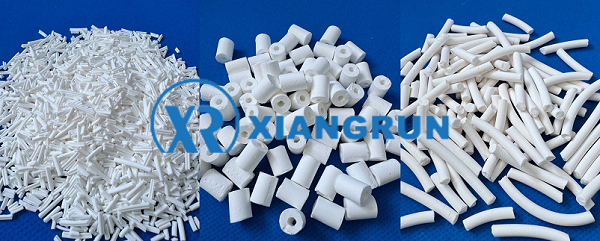
Innovations in alumina catalyst carrier technology are driving the chemical industry to transform towards high efficiency and low carbon. With the integration of materials science and engineering technology, alumina carriers may demonstrate their irreplaceable value in more fields in the future.