


In the oil, natural gas processing and coal chemical industries, hydrogen sulfide is a common harmful gas that not only corrodes equipment but also causes serious environmental pollution. In order to efficiently recover sulfur and reduce pollution, the Claus process is widely used in industry, and the core of this process is the Claus catalyst.
Claus process introduction
The Claus process is a mature technology for converting H₂S into elemental sulfur, which mainly includes two stages:
1. Thermal reaction stage: H₂S is partially burned in the combustion furnace to generate sulfur dioxide.
3H2S+32O2→2H2O+SO2+2H2S3H2S+23O2→2H2O+SO2+2H2S
2. Catalytic reaction stage: The remaining H₂S reacts with SO₂ under the action of the catalyst to generate sulfur.
2H2S+SO2→38S8+2H2O2H2S+SO2→83S8+2H2O
The sulfur recovery rate of this process can reach 95%~99%, and the performance of the catalyst directly affects the reaction efficiency and sulfur yield.
Function of Claus catalyst
The main function of Claus catalyst is to accelerate the conversion reaction of H₂S and SO₂ and ensure the efficient generation of sulfur. The ideal catalyst should have the following characteristics:
• High catalytic activity: increase the reaction rate and reduce by-products.
• Good thermal stability: adapt to the high temperature environment of Claus reaction.
• Anti-poisoning ability: resist the influence of impurities such as water vapor, hydrocarbons, organic sulfur compounds.
• High mechanical strength: avoid catalyst breakage due to airflow impact or temperature change.
Application of Claus catalysts
Claus catalysts are widely used in:
• Natural gas desulfurization plants: to treat acidic gases containing H₂S.
• Refineries: to recover sulfur produced during oil processing.
• Coal chemical industry: to purify sulfides in coal gasification or coke oven gas.
• Environmental engineering: to reduce sulfur emissions in industrial waste gas to meet environmental regulations.
Regeneration and replacement
• Regeneration method: Remove sulfate or carbon deposits through high-temperature reducing gas treatment.
• Replacement cycle: Usually 3-5 years, depending on process conditions and catalyst type.
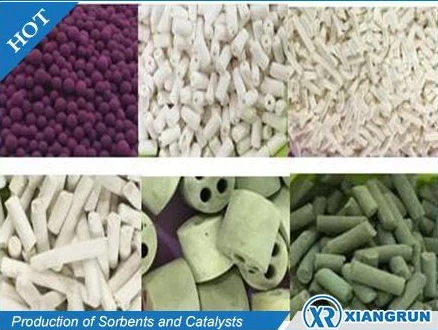
Claus catalyst is the core of Claus process. By optimizing the selection and use of catalyst, the sulfur recovery rate can be significantly improved (up to more than 99%), while reducing environmental pollution, playing an irreplaceable role in the energy and chemical industries.