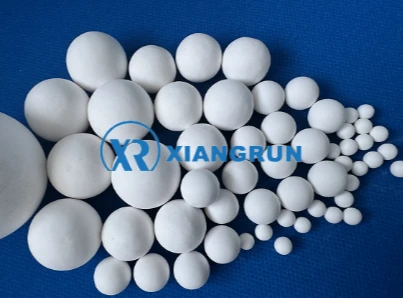
Metal packing generally offers good machinability and a certain degree of thermal conductivity, making it valuable in equipment requiring high heat transfer efficiency or specific structural configurations. Alumina ceramic balls, as a ceramic material primarily composed of alumina, offer unique advantages in many industrial processes due to their excellent heat resistance, chemical stability, and electrical insulation properties.
First, alumina ceramic balls have excellent high-temperature resistance. In petrochemical, heat treatment, gas processing, and high-temperature reaction equipment, packing materials often need to withstand relatively high operating temperatures for extended periods. Compared with some metal packing materials, alumina ceramic balls have better thermal stability under appropriate temperature and atmospheric conditions and are less likely to soften or melt due to high-temperature environments. Meanwhile, alumina ceramics have a relatively low coefficient of thermal expansion, which helps meet the stability requirements for packing materials in certain high-temperature industrial equipment.
Second, alumina ceramic balls have excellent chemical stability. During chemical production processes, packing materials may remain in contact with various gases, liquids, and chemical media for extended periods. Some metal materials are prone to oxidation and corrosion or changes in surface properties under certain corrosive conditions. In contrast, alumina ceramic balls have good oxidation resistance and can maintain stable material properties in many industrial media. This makes them suitable for certain petrochemical installations, gas treatment systems, catalyst support beds, and industrial packing equipment.
Third, alumina ceramic balls are not affected by metal oxidation and rust problems in the same way as metal packing. In high-temperature gas treatment and certain industrial environments with oxidizing atmospheres, metal materials may undergo surface oxidation, and long-term operation may also lead to corrosion and material loss. Alumina ceramic balls are inorganic non-metallic materials and do not have metal rusting problems. Under suitable operating conditions, they can reduce material contamination and replacement requirements caused by metal corrosion.
Fourth, alumina ceramic balls have excellent electrical insulation properties. Metal packing is electrically conductive, while alumina ceramics are electrically insulating materials. In specific industrial equipment involving electrical isolation or where packing materials are not expected to form conductive pathways, alumina ceramic balls can provide insulation properties that metal materials cannot offer.
In addition, alumina ceramic balls feature flexible size selection and a wide variety of product types. According to different equipment structures and process requirements, products with different alumina contents, particle sizes, and specifications can be selected to meet various industrial filling and support requirements.
Zibo Xiangrun Environmental Engineering Co., Ltd. specializes in the production and supply of alumina materials, providing alumina ceramic balls in different specifications for the petrochemical industry, industrial gas treatment, and other industrial sectors. The company's CBSP-XR3015 alumina ceramic balls include 30% and 45% alumina ceramic balls, as well as 92% and 95% high alumina ceramic balls. Corresponding product selections and customized specifications can be provided according to customers' equipment requirements and specific application conditions.
If your project is looking for alumina ceramic balls suitable for specific industrial operating conditions, please feel free to contact Zibo Xiangrun to learn more about the detailed specifications, size options, and supply solutions for CBSP-XR3015 products.