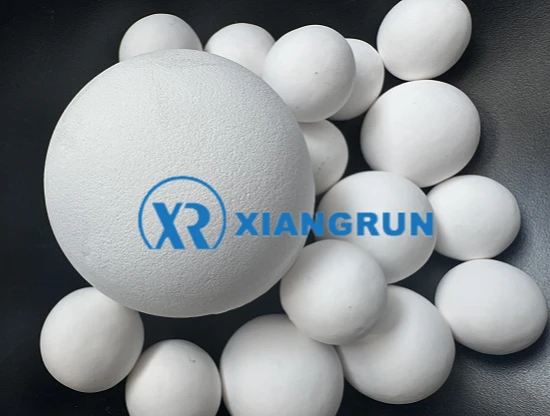
In the past, many companies selected metal balls such as steel balls and stainless steel balls as packing materials according to their equipment requirements. However, with the continuous upgrading of production processes and the increasing demands for corrosion resistance, service life, and operational stability, more and more companies have begun replacing metal balls with alumina ceramic balls.
Under many industrial operating conditions, alumina ceramic balls can provide a more stable and more economical long-term solution. For industrial facilities that require continuous operation, choosing the right material often means less downtime, lower maintenance costs, and higher production efficiency.
Why Are Metal Balls Gradually Unable to Meet the Needs of Modern Industry?
Metal balls have high mechanical strength and still play an important role in some types of equipment. However, for equipment that operates for long periods in environments with high temperatures, high humidity, acidic or alkaline media, or corrosive gases, metal materials inevitably reveal certain shortcomings.
For example, during chemical reactions, equipment is often exposed to steam, sulfides, chlorides, and various acidic media. Ordinary steel balls are prone to rusting, while even stainless steel balls may develop corrosion, pitting, or surface oxidation after long-term operation. Once the metal surface changes, it may not only affect equipment operation but also contaminate catalysts and reduce product quality.
On the other hand, metal balls are relatively heavy, increasing the load-bearing pressure on large reactors and towers. For units that require long-term continuous operation, excessive weight also increases installation, transportation, and maintenance costs.
In addition, metal materials tend to undergo thermal expansion after being heated. Under operating conditions involving frequent start-ups, shutdowns, or alternating hot and cold temperatures, stress changes are more likely to occur, affecting the long-term stable operation of the equipment.
Why Can Alumina Ceramic Balls Replace Metal Balls?
Alumina ceramic balls are industrial ceramic products made from high-purity alumina through high-temperature sintering. Compared with traditional metal balls, their greatest advantage lies in their extremely high chemical stability. They are not likely to react with acids, alkalis, steam, or most chemical media, allowing them to maintain stable performance over a long period.
In catalyst beds, alumina ceramic balls are commonly used as the support layer. They can not only evenly distribute the weight of the catalyst, but also improve gas and liquid distribution, thereby enhancing reaction efficiency. At the same time, their stable structure effectively protects the catalyst by reducing catalyst breakage caused by equipment vibration or media impact, thus extending the service life of the catalyst.
In addition, alumina ceramic balls have excellent high-temperature resistance. Even at temperatures of several hundred degrees Celsius or higher, they can still maintain good mechanical strength and dimensional stability without experiencing oxidation, rusting, or deformation like some metal materials.
Which Industries Are More Suitable for Alumina Ceramic Balls?
In the petroleum refining industry, alumina ceramic balls are commonly used in various hydrotreating reactors, desulfurization units, and catalytic cracking equipment to provide stable support for catalysts.
In natural gas purification, alumina ceramic balls can withstand long-term high-pressure operating conditions, maintain bed stability, and improve equipment reliability.
In the fertilizer industry, they are used in ammonia and methanol production units, helping improve catalyst utilization and reduce operational failures.
The environmental protection industry also widely uses alumina ceramic balls. Whether in exhaust gas treatment, VOC treatment, or tail gas purification, they provide excellent support and distribution performance.
In addition, alumina ceramic balls have become the preferred choice in fine chemicals, coal chemicals, hydrogen production units, air separation plants, and catalyst manufacturing.
How Can You Tell If You Should Replace Metal Balls with Alumina Ceramic Balls?
If your equipment operates under any of the following conditions, alumina ceramic balls are generally a better choice:
The equipment operates continuously in a high-temperature environment; the process medium is acidic, alkaline, or corrosive; the catalyst is of high value and requires stable support; the unit operates continuously throughout the year with minimal downtime for maintenance; or the equipment requires high product purity and cannot tolerate contamination from metal impurities.
Under these operating conditions, alumina ceramic balls can not only improve the operational stability of the equipment but also help companies reduce long-term operating costs.
As a professional manufacturer of alumina products, Zibo Xiangrun Environmental Engineering Co., Ltd. has long been dedicated to the research, development, and production of alumina ceramic balls, inert alumina ceramic balls, high alumina ceramic balls, and catalyst support balls. The company has mature manufacturing processes and a comprehensive quality control system, providing products in a wide range of specifications and sizes according to different operating conditions, while also supporting customized solutions. Its products are widely used in the petrochemical, natural gas, environmental protection, fertilizer, coal chemical, and fine chemical industries and have been exported to many countries and regions, earning recognition from numerous customers.
If you are looking for high-performance alumina ceramic balls to replace traditional metal balls, please feel free to contact Zibo Xiangrun Environmental Engineering Co., Ltd. Our technical team will recommend more suitable product solutions based on your equipment operating conditions, service requirements, and application needs, helping you improve equipment operating efficiency, reduce maintenance costs, and achieve more stable and efficient long-term operation.