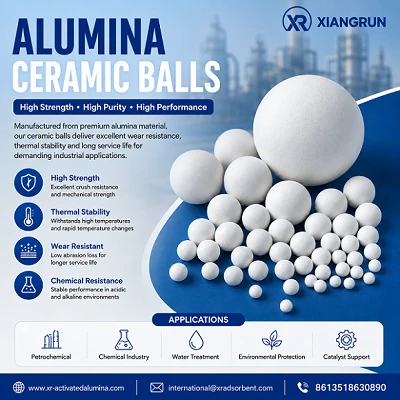
Alumina ceramic balls have high hardness, but this does not mean that they are completely free from impact damage. During transportation, continuous vibration, sudden collisions, rough loading and unloading, and excessive stacking pressure may cause individual ceramic balls to develop cracks, chipped edges, or breakage. The actual extent of damage depends on the mechanical properties of the products, packaging methods, handling conditions, and transportation distance.
Collisions during loading and unloading are one of the common risks. If packaging bags or containers are thrown around carelessly, the ceramic balls inside may collide with each other or hit hard floors and equipment surfaces, causing particle damage. Some damage may not be obvious from the outside of the packaging. Therefore, after the goods arrive, it is not enough to inspect only the outer packaging; the condition of the products inside should also be checked by sampling when necessary.
Improper stacking may also cause problems. If the packaging materials cannot withstand the weight of the goods, or if the stacking height exceeds the permitted limit, the lower packages may become deformed or damaged, thereby increasing the risk of compression and impact on the ceramic balls. Once the packaging is damaged, the products may also spill out or become contaminated with foreign materials.
Packaging of Alumina Ceramic Balls Is Very Important
For bulk industrial purchases, the packaging method should match the specifications and weight of the ceramic balls, the transportation distance, and the unloading conditions at the destination. The packaging should have adequate load-bearing capacity and be securely sealed. Ceramic balls with different alumina contents, particle sizes, and product grades should also be clearly labeled to prevent mixing during storage or loading.
Export transportation requires consideration of more factors, including container loading, cargo securing, moisture protection, loading and unloading methods, and storage arrangements after the goods arrive. Long-distance transportation usually involves multiple handling stages, making packaging integrity particularly important.
When purchasing CBSP-XR3015 alumina ceramic balls, customers can confirm suitable packaging requirements with Zibo Xiangrun according to the order quantity, destination, transportation method, and on-site loading and unloading conditions, so as to better protect the products.
Storage of Alumina Ceramic Balls Before Loading
First, the ceramic balls should be kept in their original packaging whenever possible and stored in a dry, clean, and covered area to prevent direct contact with rainwater, standing water, oil stains, dust, and other contaminants.
Second, the products should not be placed directly on damp or contaminated floors. Suitable pallets or supports can be used for storage. During stacking, the packaging supplier's requirements should be followed to avoid excessive stacking or creating unstable stacks.
Finally, before formal loading, the packaging condition should be checked, and representative product samples should be inspected.
Zibo Xiangrun Environmental Engineering Co., Ltd. specializes in the production and supply of alumina-related products. CBSP-XR3015 alumina ceramic balls are mainly used for catalyst bed support and related industrial packing applications. If you are purchasing alumina ceramic balls for fixed-bed reactors, petrochemical equipment, or catalyst support systems, please contact Zibo Xiangrun to learn about the product specifications, packaging methods, and prices of CBSP-XR3015 alumina ceramic balls. We can help confirm a suitable product solution according to your actual application requirements.