Why Shouldn't You Focus Only on the Purchase Price?
When purchasing dechlorination materials, many companies first pay attention to the unit price. However, for continuously operating industrial units, the actual cost of a dechlorination agent goes far beyond the purchase price. It also includes:
Replacement frequency
Shutdown and maintenance costs
Labor costs
Equipment wear and tear
If a dechlorination material has a lower price but requires frequent replacement or reduces equipment operating efficiency, it may increase the overall operating cost in the long run. Therefore, more and more companies are adopting a comprehensive cost evaluation approach rather than simply comparing product prices.
What Are the Common Traditional Dechlorination Materials?
Common industrial dechlorination materials include activated carbon, zinc oxide dechlorination agents, copper-based dechlorination agents, and some metal oxide dechlorination agents. Each material has its own characteristics and is suitable for different operating conditions.
For example, activated carbon has a certain adsorption capacity, but its adsorption performance may be affected in high-temperature, high-humidity, or complex gas environments. Some metal oxide dechlorination agents offer good selectivity, but in certain applications, they have relatively high costs and limited application ranges.
Therefore, when selecting a dechlorination material, it is necessary to consider process conditions, treatment media, and long-term operating costs rather than simply comparing the price of the material itself.
Cost Comparison Between Activated Alumina Dechlorination Agent and Traditional Dechlorination Materials
Although the performance of materials varies under different operating conditions, the overall cost characteristics in most industrial applications are generally as follows:
|
Comparison Item |
Traditional Dechlorination Materials |
|
|
Initial Purchase Cost |
Moderate |
Low or High (depending on the material) |
|
Dechlorination Efficiency |
High |
Varies by material |
|
Service Life |
Long |
Generally shorter |
|
Replacement Frequency |
Lower |
Higher |
|
Dusting Risk |
Low |
Higher for some materials |
|
Bed Pressure Drop |
Stable |
More likely to fluctuate |
|
Maintenance Cost |
Lower |
Higher |
|
Overall Operating Cost |
More Cost-Effective |
Generally Higher |
Why Is Activated Alumina Dechlorination Agent Becoming More Popular?
Compared with traditional dechlorination materials, high-quality activated alumina dechlorination agents generally offer the following advantages:
1. High Dechlorination Efficiency
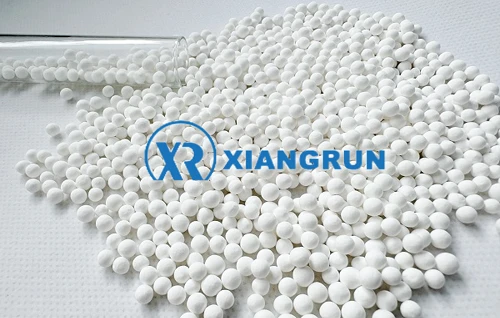
Activated alumina has a well-developed pore structure and a large specific surface area, enabling it to effectively adsorb hydrogen chloride (HCl) and some chlorinated impurities, providing cleaner feed gas or liquid for downstream processes.
2. Excellent Mechanical Strength
High-strength activated alumina particles can withstand pressure impacts during long-term operation. They are less likely to break or generate dust, effectively reducing changes in bed pressure drop and improving system operating stability.
3. Longer Service Life
Its stable pore structure and excellent wear resistance enable activated alumina dechlorination agents to maintain adsorption performance for a longer period, reducing replacement frequency and lowering maintenance costs.
4. Excellent Chemical Stability
Activated alumina can adapt to various industrial operating environments and maintain stable performance under complex working conditions, helping protect downstream catalysts and critical equipment.
As a professional activated alumina manufacturer, Zibo Xiangrun Environmental Engineering Co., Ltd. has long been dedicated to the research, development, and production of high-performance activated alumina products, providing reliable industrial adsorption solutions for customers worldwide. If you have any questions or requirements regarding activated alumina dechlorination agents, please feel free to contact us. We are your professional activated alumina manufacturer.